
Lateral under a Morrison Ranch paver walk
Clay lateral collapsed under a courtyard gate — HDD from cleanout to tap preserves the walk and rock mulch trenching would remove.
Chandler, AZ · Maricopa County
No-dig sewer and water line boring under Chandler driveways and HOA hardscape — lateral replacement when caliche and field clay heave break PVC in original Morrison Ranch phases.
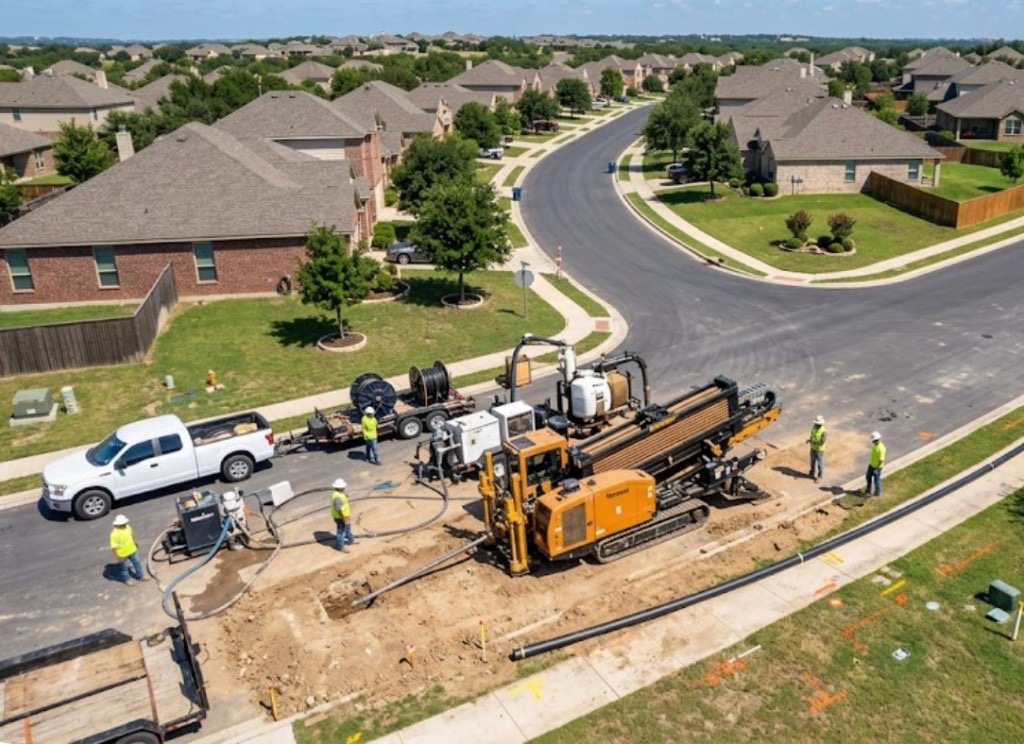
Sewer and water line boring in Chandler is the practical fix when a lateral fails under a driveway, sidewalk, or courtyard wall and the owner refuses full-yard restoration. Compact pits at the cleanout and city tap steer HDPE or PVC through caliche and agricultural fill without a continuous trench.
Morrison Ranch, Andersen Springs, and Sun Lakes neighborhoods built from the 1980s through 2000s are hitting first sewer replacements — camera inspection confirms breaks under circular drives and courtyard pavers. Directional boring in Chandler for residential work spikes after city notices and insurance-driven water leak claims.
Municipal lead rehab along older Chandler Boulevard and Arizona Avenue corridors sometimes bundles shallow laterals with main work — we coordinate tap rules, pressure test, and surface restoration per city utility detail.
Real Maricopa County angles — not generic statewide copy.
Clay lateral collapsed under a courtyard gate — HDD from cleanout to tap preserves the walk and rock mulch trenching would remove.
Post-monsoon heave cracked PVC under pavers — bore path avoids full drive removal; tie-in at meter may need a small access cut.
City notice on aging lead — trenchless pull keeps common-area mulch intact; tap responsibility spelled out in quote.
Restaurant pad on Alma School cannot lose stalls to trench — bore under asphalt with night tie-in to city main.
Chandler sewer and water bores begin with camera and locate confirmation — then pits sized for caliche stability. Pipe is pulled and tied per city tap rules; testing and restoration follow municipal requirements. Monsoon-saturated clay may delay pit work — we communicate when dry conditions matter.
Chandler parcels mix caliche hardpan, Gila River alluvium, and compacted agricultural fill — Ocotillo and west-side cobble belts slow pilots without matched mud programs.
Most Chandler bores hit caliche crust between 2 and 7 feet, then alluvial sand or compacted cotton-field fill depending on parcel age. Ocotillo and west Chandler shots add cobble lenses and fractured basalt fragments that slow penetration without correct tooling. Price Road corridor grading can hide abandoned irrigation structures that potholing catches before pits are sized. Shallow groundwater along SRP laterals and the Gila River fringe raises buoyancy risk on long HDPE pulls — we size ream stages for Chandler fill, not a copy-paste East Valley template.
East Valley heat, spring dust, and monsoon outflows shape Chandler bore schedules — sheet-flow through desert washes and afternoon lightning holds are planned into quotes.
Monsoon season from July through September softens agricultural clay and can delay entry pits on former field parcels. Spring dust on exposed Ocotillo pads affects cage and fluid handling along Price Road. Summer heat above 110°F slows morning startup on exposed sites but rarely stops work — we communicate when dry conditions matter for caliche-heavy pits rather than risk frac-outs toward SRP laterals.
City of Chandler Development Services, Maricopa County ROW, ADOT District, SRP canal easements, and Union Pacific rail agreements apply on many alignments.
Inside Chandler city limits, street cuts, driveway removals, and canal-adjacent work may need Development Services permits. Maricopa County ROW rules apply on unincorporated pockets toward the Gila River fringe. ADOT controls Loop 101, Loop 202 Santan, and US-60 access ramps — MOT plans are common on Chandler Boulevard frontage. SRP canal easements add coordination beyond standard 811. Semiconductor and defense-adjacent sites may add owner security review on pit placement.
Rock mulch, paver drives, and courtyard walls cost more to replace than a shallow trench in an empty lot — boring wins where restoration is the pain point. Wide-open rear easements on new Ocotillo lots sometimes still favor trench on price.
Length, depth, tap fees, rock, paver restoration, and access for rig staging.
You share plans or describe the problem; we confirm alignment, depth, access, and which trenchless method fits Arizona soils.
Arizona 811 ticket filed; two business days minimum before pits open unless your permit path differs. We pothole where marks conflict.
Bore plan, ADOT or city ROW permits, railroad agreements, and crossing engineering when the path leaves private property.
Compact spread for tight Scottsdale lots; larger HDD for I-17 or Loop 101 relocations — matched to length and diameter.
Steered pilot on design line, ream passes sized for your pipe or casing, fluid program tuned for caliche or decomposed granite.
HDPE fusion, steel casing, or multi-duct bundle pulled with tension and bend-radius monitoring.
Pressure test, mandrel, or survey records for owners, inspectors, and operators as spec requires.
Compact pits, replace gravel or hardscape per scope, leave 811 ticket and locate map in your project file.
Often yes when alignment and tie-in points allow pits at logical ends — confirmed on site after camera and locate.
Varies by utility and address — quote states whether owner, city, or our crew coordinates the tap.
Many driveway shots finish in one to two days after valid locates. Rock, permits, or saturated clay extend the window.
Sometimes — alignment must clear pool plumbing and structural limits. Site walk determines feasibility.
24/7 — Emergency dispatch statewide. Tell us entry, exit, pipe size, and county — a bore specialist calls back with cost drivers, not a flat rate.
Scope your alignment
Step 1 of 2 — path, pipe, and city first